

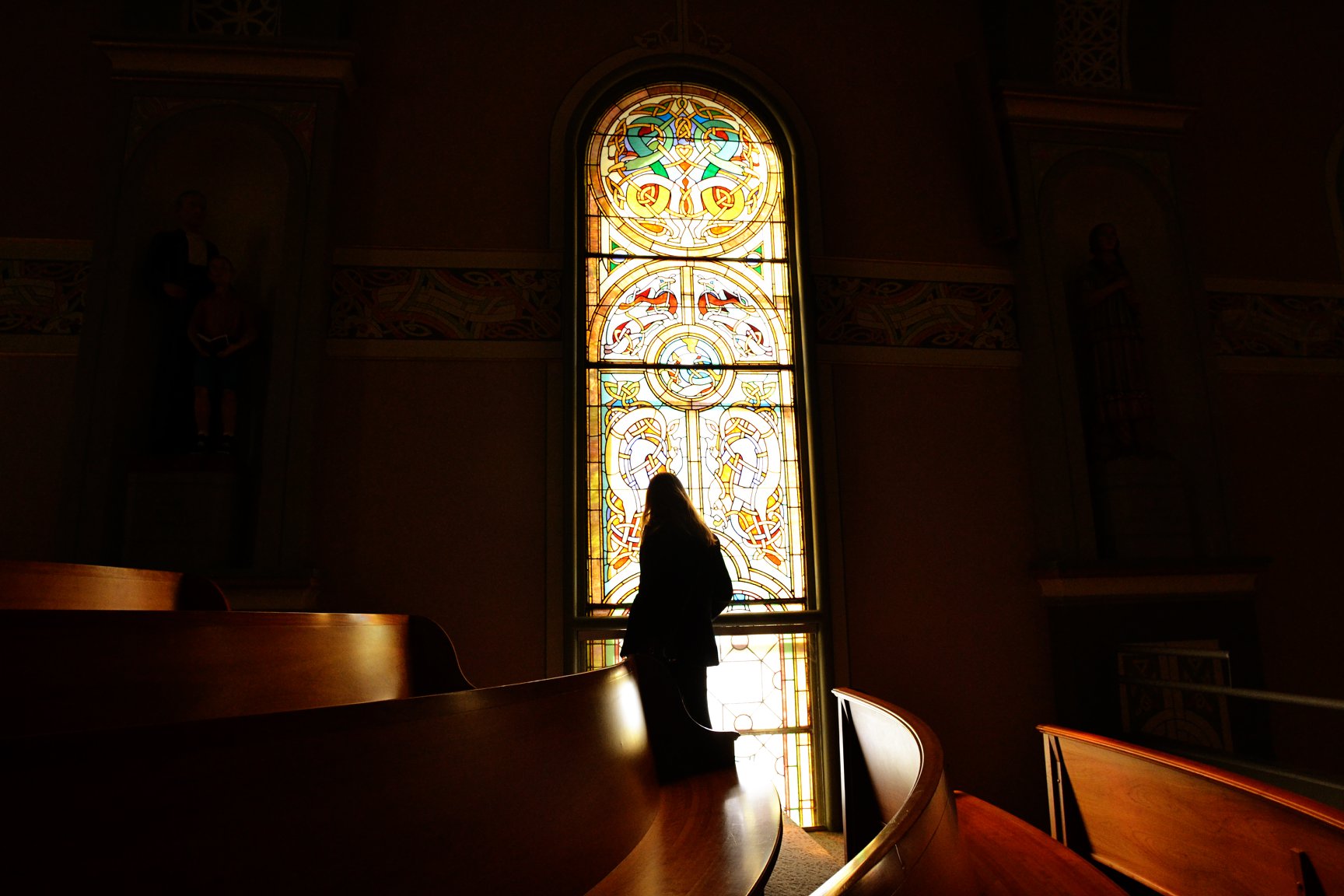

Explore how art expresses faith, shapes identity, and fosters meaningful interfaith dialogue
- Delivery: In Person on and off campus
- Duration: 6 weeks
- Day of the week: Thursdays
- Dates: September 17th to October 22nd, 2026
- Time: 6:30pm – 8:30pm
- Location: Field visits to sites for engaging with art and classroom space on campus TBA
- Cost: $150
- Level of Interfaith Dialogue (for learners taking the Diploma in Interfaith Dialogue): Dialogue of Life
Course Overview
This course explores the complex relationship of created things to religious understanding across spiritual traditions over time. Learners will examine how human creativity and divine inspiration are crucial to articulating religiosity between ourselves, each other, and our gods.
To open new conversations about how the production of religious art is critical to any study of theology or faith tradition, learners will participate in lectures and guided discussions to encourage deeper connections during inter-faith dialogue. The course will focus on how inclusive and respectful reflection on the presence or absence of images, sounds, or movements can enrich community engagement and broaden our understanding of religious experience.
SMCE3013 is an elective course within the Diploma in Interfaith Dialogue. Learners who wish to complete this program can learn more on our website. Enrolment in this course is open to all learners.
Method of Teaching
This course employs a mix of lectures, textual analysis, and discussions, encouraging critical engagement with the material. Occasional visits to spaces to engage with art will allow for greater depth of understanding.
Learning Outcomes
In this course, learners will:
Apply techniques of observation-based learning to real-world interactions with religious art to interpret function and discuss significance with others.
Analyze how theological developments and spiritual experiences are not simply or tacitly recorded but (re)created in works of religious art and artistic practices.
Evaluate and assess how the context of presentation can determine responses to the presence of religious art.
Compare and contrast the creation and action around religious art across different cultures and traditions to identify commonalities and connections across time and space.
About the Instructor

Dr. Margaret Slaughter
Dr. Margaret Slaughter brings over a decade of experience as an educator, editor, researcher, and curator, specializing in history of religions. She recently graduated with a Ph.D. in Religious Studies and Art History from Indiana University in Bloomington, Indiana. Former Managing Editor at the Center for Religion & the Human at IU and Acquisitions Editor at Novalis Publishing with Bayard Canada, she has directed writing on and about different faith traditions. During her doctoral studies, she worked as the Ethnographic Collections Curatorial Assistant at the IU Museum of Archaeology and Anthropology where she spearheaded research projects on religious artifacts.
Dr. Slaughter’s dissertation explores the theology and sculpture of medieval Ireland, grounded in hands-on archaeological study of Irish churches and monastic sites. Her range of editorial, curatorial, and academic experience studying religion and art allow her to blend practical approaches to visual culture with dynamic analysis in the classroom.
A proud alumnus of St. Michael’s College, she developed a thesis on medieval apostolic poverty during her B.A. Specialist Degree in Religious Studies and Jewish Studies.
Questions?
Stay Connected
Register Now
Subscribe to Our Mailing List
Please sign up for the latest news about our courses, programs, workshops, special lectures, and more.
