

A program of the Metropolitan Andrey Sheptytsky Institute at the University of St. Michael’s College in the University of Toronto
- Delivery & Duration: Hybrid (In-person retreat September 6, online synchronous and asynchronous sessions September to June, in-person MASI Study Days in June)
- Dates: see full calendar for details
- Cost: $450 (registrants may pay in 3 installments)
- PLEASE NOTE: Program fees do not include travel or accommodations for the closing conference: MASI Study days in June
Program Overview
Learn how to establish a rule of prayer while building a foundation of scriptural and catechetical knowledge. This program is designed as a discernment year for those who are discerning Holy Orders (Subdiaconate, Diaconate and Priesthood) within Byzantine Catholic Churches, or laypeople already involved, or interested in becoming involved, in lay-leadership within Church Ministries. Participants will receive an introduction to the Scriptures, “Christ Our Pascha” Catechism of the Ukrainian Greek Catholic Church, and training in the spiritual tradition of the Christian East while building a connection to their local parish.
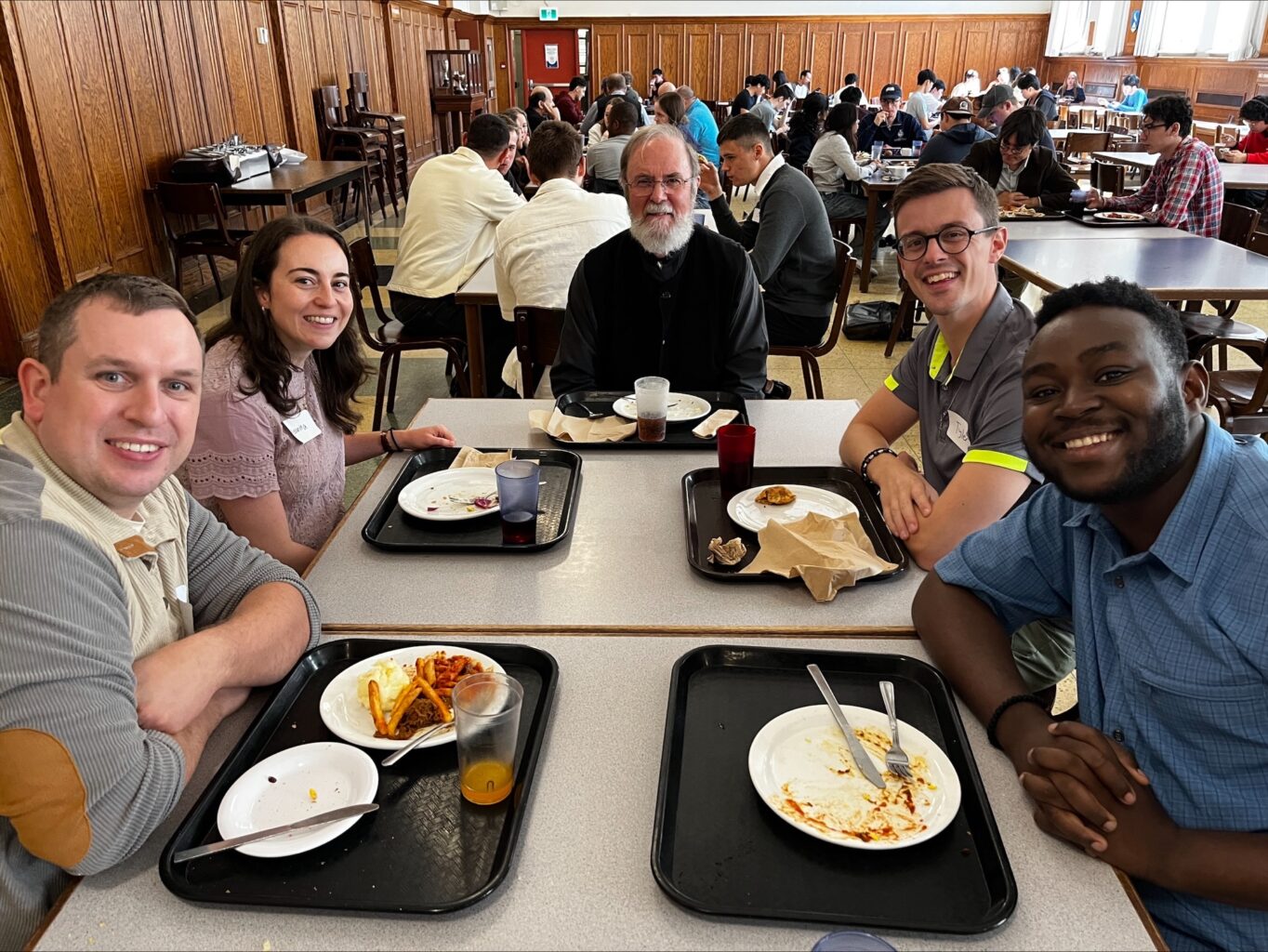
About the Metropolitan Andrey Sheptytsky Institute
The Metropolitan Andrey Sheptytsky Institute of Eastern Christian Studies (MASI) is an autonomous academic unit of the Faculty of Theology of the University of St. Michael’s College in the University of Toronto.
It specializes in the theology, spirituality, liturgy, history, and ecclesial polity of the Eastern Christian Churches, both Orthodox and Catholic.
Learning Outcomes
In this course, learners will:
- Establish a personal prayer rule consisting of the Jesus Prayer and Lectio Divina, monthly spiritual direction, and Sacramental Confession.
- Receive a basic introduction to Eastern Christian Spirituality including: theosis, ascetic discipline, kenosis, logismoi, and virtues, along with a basic Christian (patristic) anthropology.
- Maintain a working knowledge of the narrative of Salvation History and a framework for further scriptural study.
- Possess a working knowledge of the “Christ Our Pascha” catechism of the UGCC.
- Develop a basic understanding of Eastern Christian liturgical worship through collaboration with the pastor and engagement with the Liturgical Year via The Divine Liturgy: An Anthology for Worship, including a basic understanding of the “minor canonical hours,” their meaning, and how to pray them.
- Establish a liturgical and service-oriented connection with the pastor and carry out a project of almsgiving and self-giving love within a parish or community setting.
Method of Instruction
The majority of the program is available online and in a “self-paced” framework with occasional live-streamed meetings. The program commences with an opening retreat in-person on campus at the University of St. Michael’s College in the University of Toronto and concludes with participation in the Metropolitan Andrey Sheptytsky Institute Study Days in June 2026 (a popular theological conference). Learners who cannot attend the opening retreat in person will be provided with recordings of the sessions.
About the Instructor

Rev. Michael Bombak, BEd, STB, MTh
Fr. Michael Bombak is a Ukrainian Catholic priest whose journey began in Edmonton with early education in the Ukrainian Bilingual Program and a teaching career before entering the seminary. His vocational discernment led him to Holy Spirit Seminary in Ottawa, culminating in his ordination as a priest in 2016. He served as Assistant Pastor at St. Josaphat Cathedral, then as pastor of the Vermilion District, and later at St. Stephen Protomartyr Ukrainian Catholic Parish in Calgary. Fr. Michael earned a Master of Theology (MTh) from Newman Theological College, publishing his thesis on theological anthropology and contraception. He is currently a Doctorate in Ministry (DMin) student through the Toronto School of Theology, University of Toronto and serves as the Chaplain and Programming Coordinator of the Metropolitan Andrey Sheptytsky Institute. He is married with five children and enjoys mountain climbing and hiking.
Questions?
Please email Fr. Michael Bombak, michael.bombak@utoronto.ca
Sorry. This form is no longer available.
Subscribe to Our Mailing List
Please sign up for the latest news about our courses, programs, workshops, special lectures, and more.

Learn About Caring for the Spiritual Lives of Children
Offered in partnership with the Office of the Catechesis of the Good Shepherd, Archdiocese of Toronto, the Catechesis of the Good Shepherd Certificate Program is hosted by the University of St. Michael’s College Continuing Education Division. This certificate offers an introduction to the theology and praxis of Catechesis of the Good Shepherd (CGS), and prepares you to establish and lead a CGS Atrium. It is ideal for those involved or interested in caring for the spiritual lives of children at home, in schools, or in parishes.
Certificate Program Overview
The Catechesis of the Good Shepherd Certificate Program includes seminars, presentations, and hands-on practice:
- Seminars explore children’s spiritual needs and capacities and introduce the biblical and liturgical themes, theological concepts, and pedagogy fundamental to this ministry.
- Presentations demonstrate how handmade catechetical materials support children’s prayer and meditation. These are delivered as they would be in the Atrium and are designed to invite your own reflection on key biblical and liturgical themes.
- Practice includes orientation to the Atrium environment, guided work with materials, and the creation of a personal album—a handbook of CGS presentations for children.
To receive a Catechesis of the Good Shepherd Certificate from Continuing Education at the University of St. Michael’s College in the University of Toronto, learners must complete:
Basic Certificate: (180h) Endowed upon completion of Level I (ages 3 to 6) and Level II (ages 6-9)
Advanced Certificate: Endowed upon completion of Level I, Level II, and Level III (120h, ages 9-12)
About the Catechesis of the Good Shepherd
The Catechesis of the Good Shepherd (CGS) is a scriptural and liturgical approach to religious formation for children ages 3 and up. Rooted in the Montessori tradition, it was developed in Rome in 1954 by scripture scholar Sofia Cavalletti and Montessori educator Gianna Gobbi. This method honours a child’s natural capacity for wonder as essential to nurturing a relationship with God.
The CGS Atrium is a prepared sacred space where children can explore the mysteries of the Catholic faith through handmade materials, quiet reflection, and guided discovery. This approach trusts that “when wonder becomes a fundamental attitude of our spirit, it will confer a religious character to our whole life” (Cavalletti, Religious Potential of the Child, p. 139).
For full details and to register, please visit the Catechesis of the Good Shepherd‘s webpage.
This Professional Certificate equips you with the essential skills to create, implement, assess, and communicate a Social Impact Measurement Strategy for a new program, or to modify or evaluate an existing one.
For full program details, including dates and registration, visit the SIMPC Program Website
Module 1: Fundamentals of Social Impact Measurement
Build a strong foundation in the core concepts and language of social impact measurement. Explore key frameworks and approaches used across sectors, and examine how organizations define, assess, and communicate impact.
Participants will compare qualitative and quantitative methodologies, understand the role of Theory of Change, and explore how impact data is used in nonprofits, social enterprises, and corporations.
Module 2: Theory of Change
Learn how to design and apply a Theory of Change and Logic Model to guide your organization’s social impact strategy.
This module focuses on aligning mission, values, and strategy with measurable outcomes, while meaningfully engaging partners and those affected by your work. Participants will explore ethical frameworks, risks such as greenwashing, and practical tools for operationalizing impact measurement.
Culminating work includes: developing a Theory of Change, logic model, and a clear impact thesis for an organization.
Module 3: Developing a Metrics and Data Collection Strategy
Design a robust approach to measuring impact through appropriate metrics, indicators, and data systems.
Participants will learn how to select and apply frameworks (e.g., UN SDGs, IRIS+, SROI), build a data pipeline, and ensure indicators capture meaningful change over time. The module also addresses stakeholder engagement, power dynamics, and capacity considerations in data collection.
Culminating work includes: creating a comprehensive metrics and data collection strategy.
Module 4: Making the Business and Impact Case
Develop a compelling case for social impact measurement within your organization.
This module explores the costs, benefits, and strategic value of impact measurement, including resource allocation, stakeholder alignment, and long-term sustainability. Participants will assess risks and opportunities, and connect impact initiatives to broader organizational strategy and systems change.
Culminating work includes: building a business and impact case for senior leadership, including cost analysis and strategic alignment.
Module 5: Social Impact Reporting and Communication Strategies
Learn how to effectively communicate social impact to diverse audiences.
Participants will explore reporting formats and tools—from dashboards to formal reports—and examine best practices in clarity, credibility, and strategic alignment. The module emphasizes storytelling, data visualization, and stakeholder engagement to ensure impact is communicated in meaningful and actionable ways.
Culminating work includes: developing a reporting framework and presenting a capstone project, including an outline of both an impact report and evaluation report.
Bridge Beliefs, Build Understanding
What could be possible if we understood each other better? The Diploma in Interfaith Dialogue from the University of St. Michael’s College Continuing Education Division will equip you to engage in meaningful, respectful interfaith conversations. You’ll explore diverse religious traditions, practices, spiritualities, and texts through experiential learning, dialogue techniques, and a capstone project. Gain the skills to foster understanding, connection, and peace across faith communities in your everyday life.
Diploma in Interfaith Dialogue: Overview
The Diploma in Interfaith Dialogue focuses on building confidence and skills for effective communication and encounters across differences. The mandatory core course, Foundations of Interfaith Communication & Dialogue, will introduce you to the tools and techniques for open, curious, and non-judgmental communication—skills that will be central to every elective course. This course also endows you with a micro-credential upon successful completion.
Elective courses within the Diploma will be structured around the Four Levels of Interfaith Dialogue, ensuring that you experience diverse ways of encountering and appreciating different faith traditions:
Dialogue of Life – Courses in this category will explore how people of different faiths coexist in daily life, emphasizing relationships, shared experiences, and cultural interaction. You will reflect on personal experiences and examine case studies of interfaith communities.
Dialogue of Action (Deeds) – These courses will focus on current examples and opportunities for interfaith collaboration in areas such as social justice, environmental stewardship, and community service. You will examine real-world initiatives, both internationally and in Canada, where faith groups work together for the common good.
Dialogue of Religious Experience – You will engage with the spirituality and faith practices of different traditions, including meditation, prayer, rituals, and sacred objects and places. Courses may include site visits, guest speakers, or experiential activities to deepen appreciation for the commonalities, differences, and distinctive claims of various religions.
Dialogue of Theological Exchange – You will explore core beliefs, texts, doctrines, and worldviews of various religious traditions. You will learn to compare them respectfully and appreciate how religious convictions shape self-understanding, relationships with others, and our sense of meaning in the world.
To earn the diploma, you must complete at least one elective from each level.
In the capstone project, you will apply the principles of interfaith dialogue to a real-world issue of your choice. You will demonstrate your ability to foster mutual understanding, address societal challenges, and propose actionable solutions through research, reflection, and engagement with people of diverse faith perspectives and spiritualities
Diploma Outcomes
By the end of the program, you will be able to:
- Demonstrate Interreligious Understanding – Analyze key beliefs, practices, and historical developments of major religious traditions, recognizing commonalities and differences.
- Engage in Meaningful and Pragmatic Interfaith Dialogue – Apply effective communication strategies to engage respectfully, with curiosity and without judgement, in discussions and encounters across religious traditions, fostering mutual understanding and collaboration.
- Critically Reflect on Personal and Social Impacts of Religion – Evaluate the role of religion in shaping individual identity, societal values, artistic expression, and global issues
- Apply Interfaith Perspectives to Social Action – Demonstrate an understanding of the value of promoting interfaith cooperation in areas such as social justice, community building, and environmental sustainability.
- Synthesize Theological and Experiential Learning – Integrate your lived experience with faith traditions and insights to form a personal, nuanced, and applicable perspective on interfaith relations in your own milieu.
Curious to know what this learning looks like in action?
Read the reflections of 2025 graduate Simon Burke, Instructor of Introduction to Buddhism Rory Tasker, and Continuing Education Manager Roxanne Wright on Faith & Food
Admission Requirements
The Diploma in Interfaith Dialogue is an open-enrolment, non-degree credit program offered by Continuing Education. There are no academic or professional prerequisites. Learners of all faith traditions—or none—are welcome and encouraged to enrol.
To begin, choose a course and enrol. We recommend starting with SMCE3000 Foundations of Interfaith Communication & Dialogue, but courses may be taken in any order. The maximum timeframe for completing the Diploma requirements is 4 years.
To complete the diploma, you must:
Complete a mandatory core course – Take SMCE3000 Foundations of Interfaith Communication & Dialogue to gain foundational skills in interfaith dialogue.
Take 8 Elective Courses – Select from various topics across the four Levels of Interfaith Dialogue (Life, Deeds, Religious Experience, Theological Exchange), ensuring at least one course from each level, and
Complete the Capstone Course – Engage in a final project applying interfaith dialogue principles through research, creative work, or community engagement.
Note: If you completed SMD102 Dialogue Principles and Practices before Fall 2025, it fulfills the core course requirement. Learners who started before Fall 2025 may complete the program by either:
- taking the capstone, or
- taking the core course plus nine electives (including prior courses).
Fees
Each course within the program costs $150.
This program is supported by a significant financial endowment from Scarboro Foreign Missions (SFM), and extends the charism of the SFM Fathers in interfaith dialogue. SFM has been deeply committed to interfaith dialogue for many decades. This Diploma in Interfaith Dialogue situates the legacy of the Scarboro Foreign Mission to create an educational opportunity for all who wish to understand the religious ideals and values of their neighbours and even themselves within Continuing Education at USMC, where our mission, vision, and values, and adult learning pedagogies will support it.
Courses
To get started in the Diploma in Interfaith Dialogue, choose a course and enroll.
You may choose to register for individual courses without committing to the full Diploma program.
Each academic year, courses will be offered across Levels of Dialogue, both in-person and online, to ensure that you can meet the program’s breadth requirements.
Course Schedule, Fall 2025 to Fall 2026
| TERM | Course Name | Level of Dialogue | Modality |
| Fall 2026 | SMCE3000 Introduction to Interfaith Communication & Dialogue | N/A (Core Course) | In-Person |
| Fall 2026 | SMCE3003 Faith & Food | Dialogue of Life | In-Person |
| Fall 2026 | SMCE3011 Law & Religion | Dialogue of Theological Exchange | Online |
| Fall 2026 | SMCE3017 Art & Faith | Dialogue of Life | In-Person |
| Fall 2026 | SMCE3018 Gender & Faith | Dialogue of Theological Exchange | In-Person |
| Fall 2026 | SMCE3019 Introduction to Islamic Prayer and Spirituality | Dialogue of Religious Experience | Online (part of the Micro Certificate in Muslim Studies) |
| Fall 2026 | SMCE3020 Introduction to Islamic Philosophy & Mysticism | Dialogue of Religious Experience | Online (part of the Micro Certificate in Muslim Studies) |
| Spring-Summer 2026 | Online | ||
| Spring-Summer 2026 | SMCE3004 Introduction to Catholic Social Teaching | Dialogue of Deeds | Online |
| Spring-Summer 2026 | SMCE3016 Sacred and Ritual Spaces | Dialogue of Religious Experience | In-Person |
Please note: Programming is subject to change
Questions?
Stay Connected
Land Acknowledgement
We wish to acknowledge this land on which the University of St. Michael’s College operates. For thousands of years it has been the traditional land of the Huron-Wendat, the Seneca, and the Mississaugas of the Credit. Today, this meeting place is still the home to many Indigenous people from across Turtle Island and we are grateful to have the opportunity to work on this land.
- Duration: 125 hours
- Dates: January 10 – April 4, 2026
- Schedule:
- January 10, 8:30 am-12:30 pm (in person at the University of St. Michael’s College, room TBD)
- January 17, 8:30 am-11:30 am (online)
- January 24, 8:30 am-11:30 am (online)
- January 31, 8:30 am-11:30 am (online)
- February 7, 8:30 am-3:30 pm (in person at the University of St. Michael’s College, room TBD)
- February 21, 8:30 am-11:30 am (online)
- February 28, 8:30 am-11:30 am (online)
- March 7, 8:30 am-3:30 pm (in person at the University of St. Michael’s College, room TBD)
- March 28, 8:30 am-11:30 am (online)
- April 4, 8:30 am-3:30 pm (in person at the University of St. Michael’s College, room TBD)
- Instructor: Tina Drakeford
- Format: Hybrid
- Fees: $50 registration fees | $600 course fees
Join the Religious Education in Catholic Schools Part 1 Additional Qualification (AQ) Course
This foundational course is designed for teachers seeking to teach in Ontario’s Catholic schools and is accredited by the Ontario College of Teachers (OCT). Religious Education in Catholic Schools – Part 1 explores the essential elements of the Catholic faith and provides a comprehensive introduction to religious education in the Catholic school context. This course is available to any Ontario-certified teacher (P/J/I/S) in good standing with the Ontario College of Teachers.
Please note that candidates who complete the AQ specialist in Religious Education in Catholic Schools or complete it while working on the Master of Religious Education at the Regis-St. Michael’s Faculty of Theology may be exempt from one Religious Education elective within the program.
Participants will examine the theological, spiritual, and moral dimensions of Catholic education, including scripture, sacraments, Church history, Catholic social teaching, and faith development. The course emphasizes the role of the Catholic educator as a faith witness and moral leader, equipping teachers with the knowledge and skills to integrate faith across the curriculum and school community.
Through reflective practice, collaborative learning, and engagement with Church documents and curriculum guidelines, participants will deepen their understanding of Catholic education’s mission. Course candidates who successfully complete the course will be recommended to the Ontario College of Teachers to have Religious Education in Catholic Schools – Part 1 added to their Certificate of Qualification.
Enrol now to reserve your spot for a journey of professional empowerment, spiritual enrichment, and community leadership in Catholic education.
Join Mary Jo Leddy to explore the issues shaping Canada’s future
- Delivery: In-person on campus at the University of St. Michael’s College in the University of Toronto
- Duration: 4 weeks
- Day of the week: Thursdays
- Dates: Thursday April 16 – Thursday May 7, 2026
- Time: 4:00 pm to 6:00 pm
- Location: Mary Ward Centre, Loretto College Residence, 70 St. Mary St
- Cost: $225 (includes HST) **15% discount available to alumni of the University of St. Michael’s College and seniors 65+
Course Overview
Join acclaimed author and human rights advocate Mary Jo Leddy in an exploration of Canada’s pressing moral challenges. Through discussions on our relationships with Indigenous peoples, immigration, and environmental stewardship, Leddy will invite participants to critically examine the question, “Why are we here?” Drawing from her Catholic worldview yet addressing all Canadians, she challenges us to reframe our attitudes towards our shared land, fostering a collective sense of gratitude and responsibility. Reflecting on belonging, hope, and civic purpose, Leddy invites us to imagine Canada as a sanctuary for the human spirit.
Method of Teaching
This course will rely on both lecture and seminar mode of instruction, with a strong emphasis on discussion and critical analysis of course concepts, using Leddy’s 2019 book Why Are We Here? A Meditation on Canada as a source text (you may bring your own copy, or purchase a copy for $17).
Learning Outcomes
In this course, learners will:
- Identify and discuss Canada’s social and environmental challenges through a moral lens.
- Reflect on Canada’s national identity in relation to Indigenous, immigrant, and environmental perspectives.
- Explore themes of gratitude and responsibility in fostering a sustainable and inclusive future.
About the Instructor

Mary Jo Leddy founded and works at the Romero House Community in Toronto, a unique organization which provides housing and supports to refugees, many of whom live in community with staff. Mary Jo is the author of several books including Why Are We Here?, The Other Face of God and Radical Gratitude. She is the recipient of numerous awards, including the Canadian Council of Christians and Jews Human Relations Award, the Ontario Citizenship Award, and the Order of Canada. She teaches at Regis College.
Questions?
Stay Connected
Register Now
Subscribe to Our Mailing List
Please sign up for the latest news about our courses, programs, workshops, special lectures, and more.

Mappa Mundi: Mapping the Mediaeval World
- Delivery: In-person
- Date: Saturday, April 11th, 2026 – registration deadline Friday March 27
- Time: Registration: 8:30 a.m. | Symposium: 8:45 a.m. – 4:30 p.m.
- Location:
- Symposium: Charbonnel Lounge, Elmsley Hall, 81 St. Mary St
- Lunch: Romero Room, Loretto College, 70 St. Mary St
- Cost:$150 (includes HST, coffee/tea and a Mediaeval lunch)
Explore Mediaeval Mapping
Mappa mundi: Mapping the Mediaeval World will explore that mediaeval Europe from two perspectives: how mediaeval people configured their world and how mediaevalists are employing mapping to better understand that world. In the Middle Ages there were various types of maps intended to illustrate different ideas: the earth’s spherical shape complemented by continents (generally Europe, Asia, Africa, and an unknown continent, referred to as the Antipodes). Maps could depict holy sites and pilgrimage routes or different people, animals and even the unknown creatures that might inhabit space out of sight, just beyond the earth’s margins: “hic sunt dracones” (Here be dragons!). Our exploration of mediaeval mapping will take us across the mediaeval Europe and beyond, demonstrating just how well-travelled mediaeval people were. Some maps could be used in battle, others were for trade, and till mapped the seas. We will also move into micro spaces, mapping cities, and even neighbourhoods, to better understand mediaeval people’s daily lives and the challenges they could face from nature and society.
Hosted by Jacqueline Murray, University Professor Emerita, University of Guelph; Fellow, St. Michael’s College; and Fellow of the Royal Society of Canada
Learning Outcomes
This Mediaeval Saturday Symposium will provide the opportunity for participants to map and re-map our own understanding of the Middle Ages and mediaeval European society
2026 Mediaeval Symposium Presenters
James Ginther
Professor of Mediaeval Theology
Regis St. Michael’s Faculty of Theology
University of St. Michael’s College
Title: Trading with Strangers in a Strange World: An Unnoticed Marine Map of the Mediaeval World.
Abstract: There were different ways to represent the known world during the Middle Ages. One type of map this is often overlooked is the marine or portolan map. This type of map was created to assist sailors and merchants as they travelled to find sources for the many goods in demand in Mediaeval Europe. Scholars have argued that this kind of map originated in the fourteenth century, but we will explore an early map, from the mid-thirteenth century, that has only been recently discovered. While its accuracy does show that it was designed for marine use, the wealth of information it contains helps us understand how mediaeval Europeans saw the world outside of Europe.
Renée R. Trilling
Angus Cameron Professor of Old English
Centre for Mediaeval Studies / Department of English
University of Toronto
Title: A Cure for What Ails You: Traveling the World through Early English Medical Texts
Abstract: Early mediaeval medicine is often dismissed as superstition. While mediaeval people did have some rather fanciful practices, like reciting charms for protection against dwarves and elves, they also made use of many trusted remedies made from herbs and animal ingredients. And some of them actually worked. What’s just as interesting, though, is the way that mediaeval medical texts can help to map the connections between mediaeval England and the wider world. From sourcing ingredients to compiling the latest medical knowledge, the healing arts connected early Insular culture with people and places from Europe and the Mediterranean to North Africa, India, and beyond.
Emily Hutchison
Associate Professor
Department of History
Mount Royal University (Alberta)
Title: Mapping Climate Crises in Late Mediaeval Paris
Abstract: This presentation investigates a series of climate-related crises that afflicted Paris and the Île-de-France during the late Middle Ages, at the onset of the Little Ice Age. It pursues two principal objectives. First, it uses textual evidence to assess the material repercussions of the crises on the city and its people. Second, it uses mapping to analyze these repercussions within in specific neighbourhoods in Paris. Mapping the effects of mediaeval climate change, is indispensable to understanding how it effected Parisians: without attention to the spatial dimensions of environmental disruption, analysis of the impact of the Little Ice Age risks remaining abstract and unmoored from lived reality.
Vanessa McCarthy
Fellow
Centre for Renaissance and Reformation Studies
University of Toronto
Title: Mapping Sex-Workers in Mediaeval Bologna
Abstract: Mapping the residential patterns of working-poor sex workers in mediaeval Bologna reveals that far from being marginalized outcasts, sex-workers chose their neighbourhoods and their neighbours, usually other working-poor men and women, as well as students. Like their friends and family, prostitutes tended to move every two years, but never more than a block or two from their base. Neighbourhood mapping reveals that rather than being shunned because of their sex-work, these women were integrated into their local neighbourhoods and the wider religious, political, and economic life of the city.
Kelly DeVries
Professor Emeritus
Department of History
Loyola University Maryland
Title: The Technology and Portability of Premodern Maps
Abstract: Mediaeval maps are now found in museums, libraries, churches, even palaces and private homes. They are drawn on different media and different technologies were used to construct them. Many depict the world as it was then known and are sometimes populated by mythological people and beasts. Before the fifteenth century, when vivid portolan maps started to appear, the purpose of mediaeval maps is not immediately clear, beyond being artistic or decorative. This paper will discuss the history and technology of mediaeval maps and, more importantly, their portability. Why were premodern mapmakers so eager to portray the “entire world” rather than limited and nearby areas? We will conclude with a brief introduction to portolan maps, so critical for later nautical long-distance navigation and exploration.
Stay Connected
Registration is now closed.
Subscribe to Our Mailing List
Please sign up for the latest news about our courses, programs, workshops, special lectures, and more.

Unlock Your Inner Voice: Join Our Spiritual Writing Workshop!
- Duration: Full-Day Workshop
- Day of the Week: Saturday
- Date: March 28, 2026
- Time: 10:00 am – 3:00 pm
- Location: Mary Ward Centre, Loretto College Residence, 70 St. Mary St
- Cost: $100.00 (includes HST)
Longing to connect on a deeper level? Looking to explore questions that keep arising? Come. Be inspired. Follow your pen into Mystery. Pray on paper. Write towards a deeper understanding of who you were, who you are, and who you are called to be.
No previous writing experience is necessary.
Come to our safe, affirming circle with an open heart, an empty notebook, and leave with a practice that will challenge, console and delight. We follow the Amherst Writers and Artists Method in which you learn to trust your own voice.
**Coffee will be provided, please plan to bring a litterless lunch or purchase lunch from a local café**
Learning Outcomes:
In this workshop, participants will:
Explore a Reflective Writing Practice: Participants will practice a unique method of approaching personal writing practice that encourages introspection, creative exploration, and a deeper sense of self-awareness.
Deepen Spiritual Insight and Connection: Participants will explore their inner experiences and spiritual questions, fostering a deeper connection to self and others within a supportive, reflective community.
About the Instructors
Kate Marshall Flaherty has taught writing as a spiritual practice, meditation, and mindfulness, and now teaches in the social responsibility and sustainability modules at the University of St. Michael’s College in the University of Toronto. Author of seven books of poetry, Kate guides Stillpoint writing workshops in the Amherst Writers and Artists Method. She and Susie have written together for decades.
Susie Whelehan spent 32 years teaching children that God loved them as they were, and recently co-facilitated a course called “Poetry, Prayer and the Political Moment” in Continuing Education at the University of St. Michael’s College in the University of Toronto in the Fall 2024 semester. She writes poetry (and has published one poetry collection, The Sky Laughs at Borders), essays, memoirs, and guides Oasis writing workshops in the AWA method.
Questions?
Stay Connected
Register Now
Subscribe to Our Mailing List
Please sign up for the latest news about our courses, programs, workshops, special lectures, and more.

Create hand-bound works of art
- Duration: 4 Weeks
- Day of the Week: Thursday
- Time: 6:30 p.m. – 9:00 p.m.
- Dates: Thursday January 22, 2026 to Thursday, February 12, 2026
- Delivery: In-person, Kelly Library Print Studio, 113 St. Joseph St., Toronto
- Cost: $290 (includes HST & materials) **15% discount available to alumni of the University of St. Michael’s College and seniors 65+
Course Overview
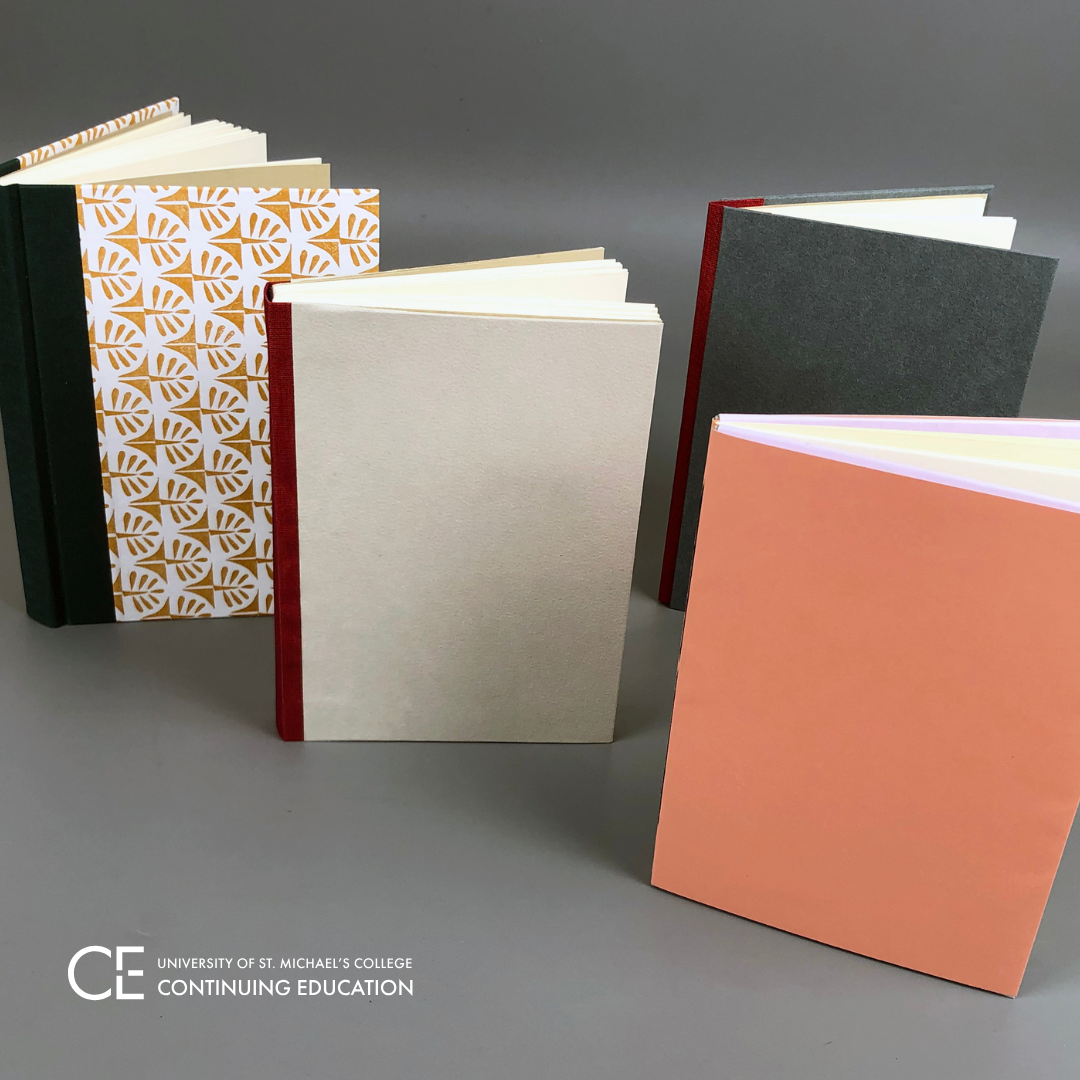
In this course, we will explore two variations of hard-covered books with multiple sections, the Sewn Board Binding and Case Bound styles:
Sewn Board Binding style allows for flat opening of the book and laminated thin boards.
Case Bound books have the traditional look of a shelf-ready hardcover tome. The two structures are sewn and glued, covered in cloth and paper, and can be used as journals, sketchbooks, or artist’s books.
This course is suitable for learners of all levels, no previous bookbinding experience is required.
Method of Instruction
This course combines guided demonstrations with hands-on practice to teach two hardcover book structures. Learners will explore the flat-opening Sewn Board Binding and the traditional Case Bound Book. Each project involves sewing, gluing, and covering with cloth or paper, with step-by-step instruction ensuring mastery of each technique. Small-group guidance and individual feedback will support learners in refining skills and troubleshooting challenges, resulting in three completed books suitable for use as journals, sketchbooks, or artist’s books.
Learning Outcomes
In this course, you will:
- Develop skills in creating book structures.
- Learn techniques of sewing, gluing, and covering books with cloth and paper.
- Explore the practical applications of these book forms for personal projects, such as journals, sketchbooks, or artist books, and their potential for customization.
About the Instructor

Andrew Huot is a book artist and bookbinder in Toronto, ON, Canada, where he operates Big River Bindery. He taught bookbinding, conservation, and preservation at the School of Information Sciences at the University of Illinois for 12 years. In addition to conservation and bookbinding, he teaches bookbinding and book arts in his Scarborough studio, for the Canadian Bookbinders and Book Artists Guild, and at arts centres around Toronto. He holds a Master’s in Book Arts from the University of the Arts in Philadelphia, and his artists’ books use photographs, linoleum cuts, and text to share the humorous side of everyday life. His artists’ books are in collections including the Art Institute of Chicago, Yale University, Emory University, and Ontario College of Art & Design. See more of his work at bigriverbindery.com and andrewhuot.com
Questions?
Please contact ce.stmikes@utoronto.ca
This course is now full.

Please subscribe to our mailing list for the latest news about our courses, programs, workshops, special lectures, and more.
Create beautiful hand-bound books
- Duration: 4 Weeks
Dates: February 26th to March 19th, 2026 - Day of the Week: Thursday
- Time: 6:30 pm – 9:00 pm
- Delivery: In-person
- Location: Kelly Library Print Studio, 113 St. Joseph St., Toronto
- Cost: $290 (includes HST & materials) **15% discount available to alumni of the University of St. Michael’s College and seniors 65+
In this course, learners will be working with more advanced book structures. We will explore two variations of hard-covered books with multiple sections. The first, Sewn Board Binding, is a variation allowing for flat opening of the book and laminated thin boards. The last, Case Bound Book, has the traditional look of a shelf-ready hardcover tome. The two structures are sewn and glued, covered in cloth and paper, and can be used as journals, sketchbooks, or artist’s books.
Method of Instruction
This course combines guided demonstrations with hands-on practice to teach two hardcover book structures. Learners will explore the flat-opening Sewn Board Binding and the traditional Case Bound Book. Each project involves sewing, gluing, and covering with cloth or paper, with step-by-step instruction ensuring mastery of each technique. Small-group guidance and individual feedback will support learners in refining skills and troubleshooting challenges, resulting in three completed books suitable for use as journals, sketchbooks, or artist’s books.
Learning Outcomes
In this workshop, participants will:
- Develop skills in creating advanced book structures
- Learn techniques of sewing, gluing, and covering books with cloth and paper
- Explore the practical applications of these book forms for personal projects, such as journals, sketchbooks, or artist books, and their potential for customization
About the Instructor

Andrew Huot is a book artist and bookbinder in Toronto, ON, Canada, where he operates Big River Bindery. He taught bookbinding, conservation, and preservation at the School of Information Sciences at the University of Illinois for 12 years. In addition to conservation and bookbinding, he teaches bookbinding and book arts in his Scarborough studio, for the Canadian Bookbinders and Book Artists Guild, and at arts centres around Toronto. He holds a Master’s in Book Arts from the University of the Arts in Philadelphia, and his artists’ books use photographs, linoleum cuts, and text to share the humorous side of everyday life. His artists’ books are in collections including the Art Institute of Chicago, Yale University, Emory University, and Ontario College of Art & Design. See more of his work at bigriverbindery.com and andrewhuot.com
Explore the Intersection of Spirituality and Sustainability
- Delivery: Online
- Duration: 6 weeks
- Day of the week: Wednesday
- Date: February 4th to March 11th, 2026
- Time: 6:30 p.m. to 8:30 p.m.
- Location: Online via Zoom
- Cost: $150 (includes HST) **15% discount available to alumni of the University of St. Michael’s College and seniors 65+
- Level of Interfaith Dialogue (for learners taking the Diploma in Interfaith Dialogue): Dialogue of Life
Course Overview
This course explores eco-spiritualities within and across religious traditions, with attention to theological, ethical, and systemic dimensions of ecological realities around the world. Students will engage with interfaith texts and traditions to examine how spirituality shapes environmental worldviews and inspires action in the face of climate change and ecological degradation.
SMCE3008 is an elective course within the Diploma in Interfaith Dialogue. Learners who wish to complete this program can learn more on our website. Enrolment in this course is open to all learners.
Method of Instruction
The course incorporates a variety of instructional methods, including comparative text analysis, seminar-style discussions, and lectures enriched with multimedia content. Assessment tasks are specifically designed for adult continuing education learners, providing opportunities to demonstrate mastery of key course concepts in a format that aligns with their educational needs and professional goals.
Learning Outcomes
In this course, learners will:
- Examine theological foundations for eco-spirituality across traditions
- Analyze structural causes of ecological harm from a faith-based lens
- Evaluate how eco-theologies intersect with social justice
- Interpret scriptural texts through ecological lenses
- Explore the role of religious institutions in climate advocacy
- Engage in comparative religious analysis of nature and creation
- Articulate a faith-informed response to ecological challenges
About the Instructor

Rosemary Boissonneau is a PhD candidate in Theological Studies at Regis St Michael’s Faculty of Theology, specializing in ecotheology and Hebrew Bible. She is also a teaching assistant for the Gilson Seminar in Faith and Ideas in the USMC’s Christianity and Culture Program. She holds a MA in theology from St. Mike’s and a Certificate of Specialization in Theology and Ecology from the Elliott Allen Institute for Theology and Ecology, where she studied socio-ecological justice and eco-spirituality from a variety of spiritual traditions. An activist in the climate movement for over ten years, Boissonneau has been especially involved in faith-based climate action, organizing and mobilizing faith communities in a multi-faith context in Toronto with such groups as For the Love of Creation, Fridays for Future and ClimateFast. As a research associate for Regis St. Michael’s Critical Conversations in Catholic Education Project, she helped develop workshops and resources for educators that explore youth climate anxiety from a spiritual perspective. Boissonneau has also worked as an editorial assistant on several academic volumes in ecotheology, eco-spirituality and ecological ethics.
Questions?
Stay Connected
Register Now
Subscribe to Our Mailing List
Please sign up for the latest news about our courses, programs, workshops, special lectures, and more.

Exploring Faith, Identity, and Justice through Peacebuilding
- Delivery: Online
- Duration: 6 weeks
- Day of the Week: Tuesdays
- Dates: January 13 to February 17, 2026
- Time: 6:30 to 8:30 p.m.
- Location: Online via Zoom
- Cost: $150 (includes HST) **15% discount available to alumni of the University of St. Michael’s College and seniors 65+
- Level of Interfaith Dialogue (for learners taking the Diploma in Interfaith Dialogue): Dialogue of Deeds
Course Overview
This course explores the intersections of faith, identity, and justice through the lens of peacebuilding and reconciliation. Students will engage with historical and contemporary examples of faith-inspired peacebuilders, analyze how religion and media can both foster and hinder peace, and reflect on their own roles as agents of change. Through engaged learning, critical reflection, and compassionate dialogue, students will develop the skills necessary for meaningful interfaith engagement and transformative action.
SMCE3007 is an elective course within the Diploma in Interfaith Dialogue. Learners who wish to complete this program can learn more on our website. Enrolment in this course is open to all learners.
Learning Outcomes
By the end of this course, learners will:
- Create personal reflections and action plans for peacebuilding in communities.
- Understand the role of religion in both conflict and peacebuilding.
- Analyze media narratives and their impact on public perception and peace.
- Apply interfaith principles to real-world peace initiatives.
- Evaluate historical and contemporary peacebuilders through a faith-based lens.
Method of Instruction
Teaching methods combine weekly two-hour lectures with student-led presentations, reflective writing, and case study analysis. Learners will also benefit from guest speakers and multimedia resources, as well as interactive learning activities such as documentary viewings that connect theory to real-world contexts.
About the Instructor
Shahin Pardhan, MBA
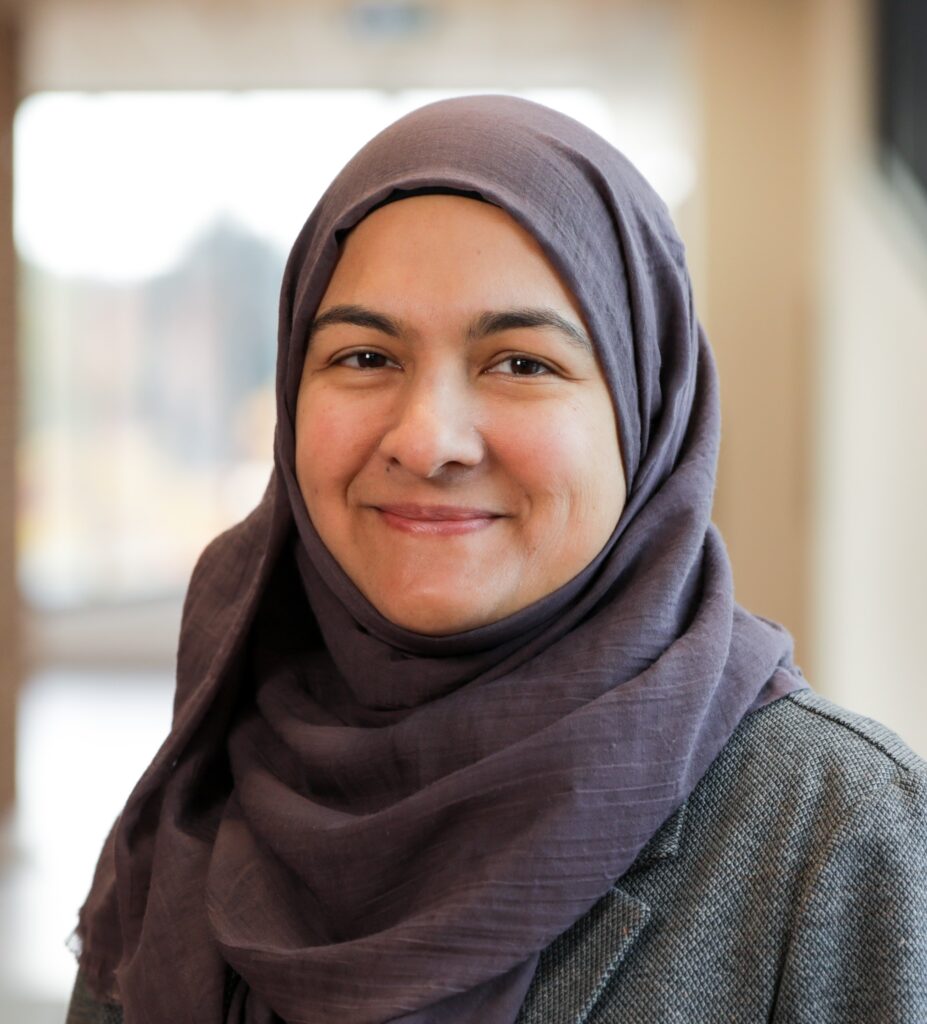
Shahin Pardhan created and teaches Islam in the Workplace (MOS 2222), an organizational behaviour course that equips students to foster inclusive work environments through understanding Islamic practices and religious accommodation. She holds a BBA and MBA from the Schulich School of Business and has over 20 years of experience in the nonprofit and corporate sectors. Shahin is a long-time community advocate, serving as the Muslim representative at the award-winning London Interfaith Peace Camp for over a decade, and she regularly speaks at interfaith events across high schools, universities, and faith communities. Her teaching philosophy emphasizes inclusive, experiential learning that connects theory to practice and empowers students to lead with empathy and integrity.
Questions?
Stay Connected
Please note registration is now closed.
Subscribe to Our Mailing List
Please sign up for the latest news about our courses, programs, workshops, special lectures, and more.

Engage in Meaningful Communication Across Differences
- Delivery: Online via Zoom
- Duration: 6 weeks
- Day of the week: Thursdays
- Dates: February 26 to April 2, 2026
- Time: 6:30pm – 8:30pm
- Location: Online via Zoom
- Cost: $150 (includes HST) **15% discount available to alumni of the University of St. Michael’s College and seniors 65+
- Level of Interfaith Dialogue (for learners taking the Diploma in Interfaith Dialogue): Core Course
Course Overview
This foundational course provides a practical introduction to interfaith dialogue, equipping learners with tools to engage in meaningful conversations across religious and cultural differences. Learners will explore the four levels of dialogue — the dialogue of life, the dialogue of action, the dialogue of theological exchange, and the dialogue of religious experience. Emphasising real-world application, this course fosters skills in active listening, and conflict transformation. By the end of the course, you will more confidently navigate interfaith conversations, fostering understanding and collaboration in your communities and professional settings.
**SMCE3000 is the foundational course for the Diploma in Interfaith Dialogue. It is recommended that learners who wish to complete this Diploma program take this course first.
Micro Credential
Learners who successfully complete SMCE3000 will receive a micro credential for this course.
USMC CE is proud to offer micro credentials—digital, verifiable credentials that you own and can share on your résumé, LinkedIn profile, and more. Micro credentials are certifications of assessed learning that focus on specific, relevant skills and competencies. These programs are designed for professionals seeking rapid, practical training to meet today’s social and environmental challenges. Whether you’re advancing your career, or deepening your expertise, our micro credentials deliver focused learning backed by real-world relevance, and academic excellence.
Method of Teaching
This course will be delivered in online via Zoom. Interactive discussions, case-based learning, and reflection will be used to practise the application of tools for effective interfaith dialogue practice.
Learning Outcomes
- Define interfaith dialogue and its significance in today’s world
- Identify and apply the four levels of interreligious dialogue
- Cultivate greater personal openness to, and tools for, interreligious dialogue and engagement, and communicating effectively across difference
- Practice dialogue techniques through structured exercises and real-world scenarios
- Reflect critically on lived examples of interreligious dialogue and collaboration in Canada, the Greater Toronto Area, and students’ own local contexts
- Create a personal or professional action plan for implementing interfaith dialogue skills
About the Instructor

Dr. Mia Theocharis is the Director of Advocacy, Emerging Campuses at Hillel Ontario, where she leads strategic initiatives to support Jewish students and allies on campuses without a formal Hillel presence. In this role, she develops student leadership pipelines, designs targeted programming, and works closely with university administrators and EDI offices to address student concerns. With nearly a decade of experience in higher education—as a researcher, educator, and advocate—she is deeply committed to bridging scholarly insight with real-world impact. Mia completed her PhD in Theological Studies at the University of St. Michael’s College in the University of Toronto. Her research explores Jewish-Christian relations from the 19th to 21st centuries, with particular attention to antisemitism, the Holocaust, and the Second Vatican Council declaration Nostra aetate. Through historical methodology, critical analysis, and interdisciplinary research, her work aims to confront antisemitism, foster interreligious and interideological understanding, and ensure the lessons of the past inform our present. Her dissertation, supported by a prestigious SSHRC Doctoral Fellowship, examines the development and influence of Canadian Catholic theologian Gregory Baum’s theological thought on Jewish-Christian relations in Canada and internationally. In the classroom, Mia cultivates inclusive spaces where students grapple with complex histories, reflect on their contemporary relevance, and engage in interfaith dialogue as a vital practice for understanding others as they understand themselves—grounded in empathy, humility, and intellectual integrity.
Questions?
Stay Connected
Subscribe to Our Mailing List
Please sign up for the latest news about our courses, programs, workshops, special lectures, and more.